




# Business
Lord Stanley Fink at Britannia: what a chairman appointment changes
The company announcement and August 2026 director filing provide a starting point for assessing board oversight and responsibilities.




The Consumer Financial Protection Bureau published its final Regulation B revision on April 22, 2026. Regulation B implements the Equal Credit Opportunity Act (ECOA), the federal law governing discrimination in credit. The revision addresses three areas: disparate impact, discouragement of applicants, and special purpose credit programs. [1]
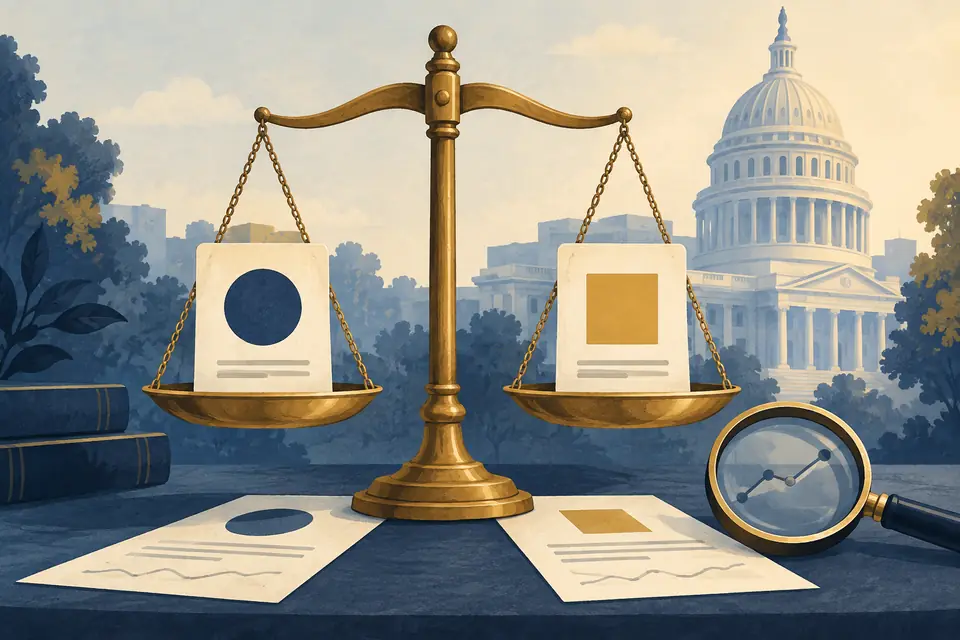
The final text adopts the CFPB’s interpretation that ECOA does not authorize disparate-impact liability, also called the effects test. This concerns policies with unequal effects even without discriminatory intent. It is a different question from intentional differential treatment because of a protected characteristic. [2]
The rule also further defines when a creditor’s conduct constitutes discouragement and adds prohibitions and conditions for special purpose credit programs. Those programs provide targeted credit assistance under specified conditions. The Federal Register notice specifies July 21, 2026 as the rule’s effective date. [2]
The change revises the regulation’s interpretation of the statute; it does not repeal ECOA. For an individual credit decision, keep the application, correspondence, and the lender’s explanation. Those records are more useful for assessing a disputed denial than assumptions based on a headline about deregulation.
A review needs to connect each change to actual practices: application criteria, marketing language, and the eligibility terms of targeted programs. These involve different decisions and should be examined separately.
Use the operative text, relevant dates, and any subsequent court orders when assessing a specific obligation. Other federal and state requirements may also apply. This post explains the April rule as published; it does not determine the legality of an individual lending decision.
Sources support the dates and events discussed. This post is not a live update. Financial examples and analysis are for general information. Article images are AI-generated editorial illustrations, not photographs of the events or people discussed.
Revision note: This account concerns the rule as published in April 2026. Its stated effective date is not a finding about subsequent litigation or every lender’s obligations.
For factual corrections, see our corrections policy.
The company announcement and August 2026 director filing provide a starting point for assessing board oversight and responsibilities.

Two trading sessions show how changing expectations about shipping and energy supplies can move different markets.

A practical way to apply the five steps: challenge requirements, remove duplication, simplify, speed up, and automate.