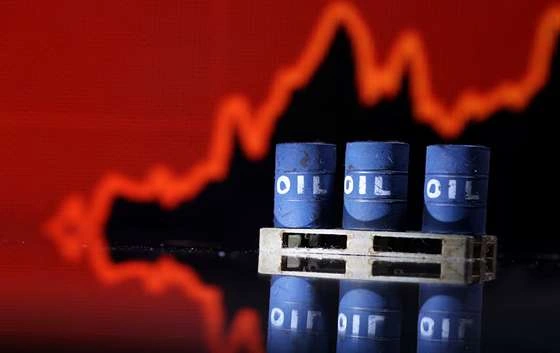
By the end of 2025, Brent crude oil is on track to have its biggest yearly loss ever.Even though there are tensions between countries and OPEC+ is trying to calm the market, the energy sector is still worried about the falling oil prices.Brent crude prices have been falling for the third year in a row because there is too much supply and not enough demand.It's hard to cut back on production while still meeting the world's energy needs.
Brent Crude Didn't Do Well in 2025
Brent crude has had a lot of problems this year, which is why it has lost money for the third year in a row.Prices have been falling since December, which is a sign of a bigger problem in the world's energy markets.Concerns about too much supply are still at the top of the list because oil production has stayed high even though OPEC+ has cut back on it.Because of this imbalance between supply and demand, prices haven't gone up much.This makes it even less likely that the oil market will get better.
The main reasons why oil prices have gone down
One of the main reasons why Brent crude prices are going down is that there is too much of it.OPEC+ has tried to keep output levels in check, but oil production around the world has stayed high.Countries that aren't in OPEC+ have kept pumping a lot of oil into the market, which has outpaced the rise in global demand.This extra has made a big surplus, which keeps prices low.
There has also been a problem with weak global demand for a long time, along with too much supply.After the outbreak, the economy has taken longer to bounce back in many places than expected.Because of this, the supply-demand imbalance is worse because global oil use hasn't gone back to where it was before the crisis.The demand for traditional oil is also going down because more people are using other sources of energy and using energy more wisely.
When there are geopolitical tensions, especially in oil-producing areas like the Middle East, oil prices usually go up because people are worried about supply problems.Prices have been less affected by these conflicts by 2025, though.Prices haven't gone up too much, even though there have been some problems with the oil supply.
What OPEC+ Did to Make Oil Prices Go Down
OPEC+ has been a big part of the effort to stabilize oil prices by cutting production in a coordinated way.Saudi Arabia and Russia are leading the way for OPEC+ countries to cut back on production in order to lessen the effects of too much supply.The market is still under pressure, though, because countries that aren't part of the alliance are still making a lot of things.
Problems in OPEC+ have also made it harder to find a balance between supply and demand.Disagreements between member countries and the difficulty of putting production limits in place have made it harder for the group to have a big effect on prices.Because of this, OPEC+ has tried to cut production in response to falling prices, but the overall effect has been small.
The market seems like it will be good in 2026
When we look ahead to 2026, we still don't know what will happen to oil prices.Some experts believe that the economy could start to recover if demand around the world goes up in the next few months.Some people don't agree.Economic growth in important areas, especially in Asia, could lead to higher oil prices and demand.
But a lot of experts say that the problem of too much supply may last until the new year, which will keep prices low.Oil prices may stay low until OPEC+ comes up with a better way to control output and keep the world's supply in balance.The market will also stay unstable because of geopolitical threats and other problems in the supply chain.

ABOUT AUTHOR
Jordan M. Ellis is an American journalist and author who writes about the people and numbers in the economy, the stock market, and other areas.

# Banking
PNC Financial Services has said that it wants to open more than 300 new bank branches across the country by 2030.Learn what this growth means for people, communities, and the banking industry.
# Banking
Customers of Bank of America say that their mobile and online banking are down and that their balances are showing up as zero

# Banking
Federal Reserve is putting billions of dollars to U.S. banks every day to keep financing markets stable.






Leave a Reply