



# ESG
Perma-Pipe Names Carbon Capture Expert Nancy Zakhour to Board
On April 8, 2026, Perma-Pipe (Nasdaq: PPIH) adds Nancy Zakhour, an expert in renewable energy and carbon capture, to its board.


Sat, June 20, 2026

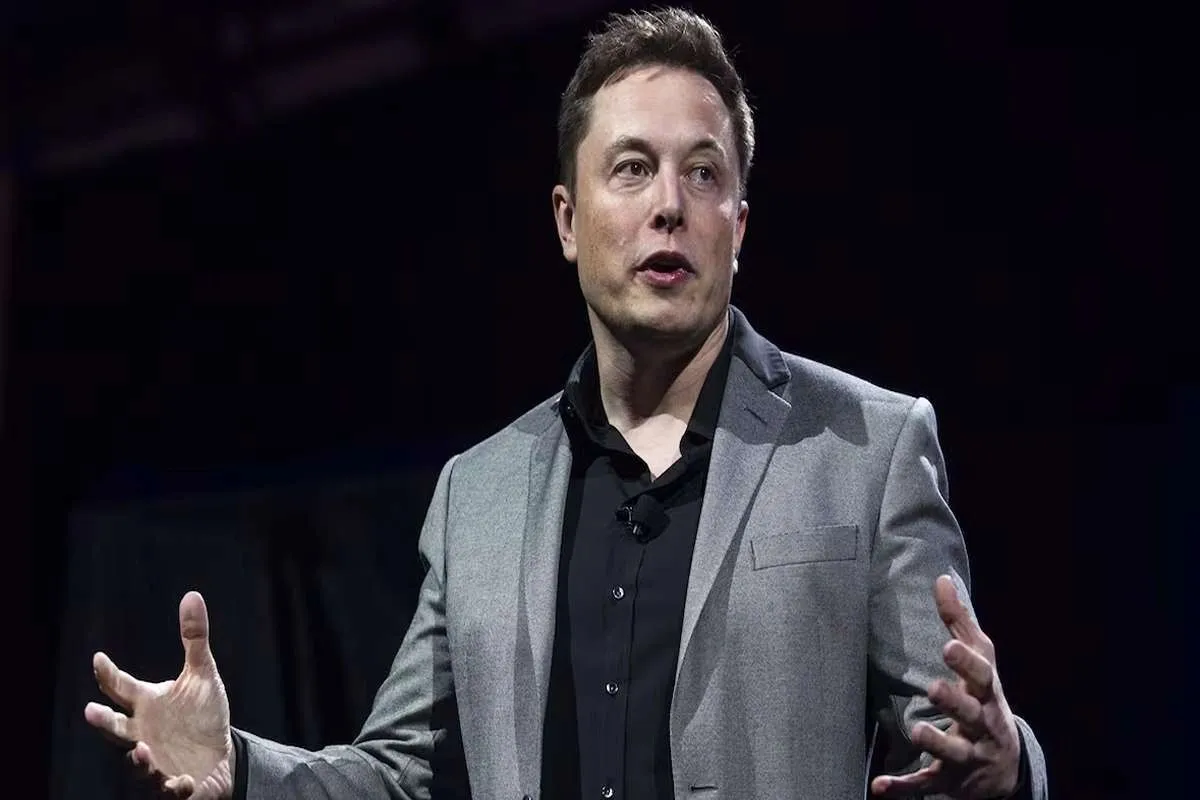
Elon Musk has a blunt way of describing how companies should solve problems: most requirements are wrong, most processes are bloated, and many teams waste time optimizing things that should not exist in the first place.
His five-step algorithm is a practical framework for engineering, manufacturing, product development, and company operations. It is especially useful for teams that move slowly, overcomplicate decisions, or automate bad processes before questioning whether those processes are needed.
Musk's core message is simple: before you improve something, challenge it. Before you automate it, simplify it. Before you speed it up, make sure it should exist at all.
The first step is to question the requirements.
According to Musk, every requirement should be treated with suspicion, no matter who created it. A requirement from a senior leader, smart engineer, expert, or respected department can still be wrong.
In fact, Musk argues that requirements from smart people can be more dangerous because teams are less likely to challenge them. When a requirement sounds intelligent, people may assume it is correct. That assumption can lead to wasted time, wasted money, and unnecessary complexity.
A strong requirement should also have an owner. Musk says a requirement should come with the name of a person, not a department. If a rule, constraint, or specification cannot be traced back to a responsible individual, it becomes difficult to question, revise, or remove.
This matters because many companies carry outdated requirements that nobody owns anymore. A rule may have been created years earlier by someone who no longer works at the company, but the organization continues following it as if it were essential.
The lesson: do not blindly obey requirements. Interrogate them.
The second step is to delete aggressively.
Musk says teams should try very hard to remove parts, steps, approvals, meetings, mechanisms, or processes. If the team never has to add anything back, it probably has not deleted enough.
This is one of the most important ideas in Musk's operating philosophy. Organizations naturally add complexity. A new step is added "just in case." A backup process is created "just to be safe." A feature is included "because someone might need it."
Over time, these small additions create heavy systems.
Musk argues that "just in case" logic can be used to justify almost anything. The problem is that every extra part or process carries a cost. It can slow production, increase failure points, confuse teams, and create unnecessary work.
For companies building ambitious products, deletion is not optional. It is a competitive advantage.
Only after questioning requirements and deleting unnecessary elements should a team simplify or optimize.
Musk says this is a common mistake among smart engineers: they optimize something that should not exist.
This happens because people are trained to answer the question they are given. In school, students are rewarded for solving the assigned problem. They are usually not rewarded for saying, "This is the wrong question."
That habit carries into companies. Employees optimize reports that no one needs. Engineers improve features that should be removed. Managers refine approval processes that should be deleted entirely.
Optimization feels productive, but it can be wasteful if the thing being optimized has no real purpose.
The lesson: optimization is valuable only after deletion.
The fourth step is to move faster.
Once the team has challenged the requirements, deleted unnecessary work, and simplified the system, it can focus on speed.
Musk's point is not that speed is bad. He believes teams are often moving too slowly. However, accelerating too early creates problems.
If a company speeds up a bad process, it only produces bad results faster. If it accelerates unnecessary work, it wastes resources at a higher velocity.
This is why acceleration comes after simplification. Speed should be applied to a clean, useful, and necessary process — not to a bloated one.
The lesson: go faster, but only after you have removed what should not be there.
The final step is automation.
Many companies make the mistake of automating too early. Automation feels advanced, efficient, and modern. But if the underlying process is flawed, automation only locks in the flaw.
Musk admits that he has personally made this mistake. He says he has gone through the five steps backward: automating first, then accelerating, then simplifying, and only later deleting the unnecessary part.
His example from Tesla's Model 3 production line illustrates the danger.
During Model 3 production, Tesla had five fiberglass mats placed on top of the battery pack between the floor pan and the battery. These mats became a bottleneck in the battery pack production line. Musk initially tried to fix the automation and improve the robot handling the process.
But eventually, he asked a more basic question: what are these mats actually for?
The battery safety team said the mats were for noise and vibration. The noise, vibration, and harshness team said they were for fire safety.
In other words, no team had a clear, accountable reason for the part.
Tesla then tested vehicles with and without the mats and found no noticeable difference. The solution was not to improve the robot. The solution was to delete the mats and bypass the expensive automation entirely.
The lesson: never automate a process until you know it is truly necessary.
Musk's five-step algorithm can be summarized like this:
The power of Musk's algorithm is that it fights the natural tendency of companies to become more complex over time.
Most organizations add rules, steps, meetings, tools, reports, and systems. Very few remove them with the same energy.
This creates operational drag. Teams become busy instead of effective. Processes become protected simply because they already exist. Employees spend time maintaining complexity instead of creating value.
Musk's method forces companies to reverse that pattern. It encourages teams to challenge assumptions, remove waste, and focus only on what matters.
The algorithm is not only for rockets, cars, or factories. It can be applied to software development, marketing operations, product design, hiring, customer support, content production, and almost any business workflow.
Before building more, ask what can be removed. Before improving a process, ask whether it should exist. Before automating work, ask whether the work is necessary.
That is the real principle behind Elon Musk's five-step algorithm: the best process is often the one you delete.
On April 8, 2026, Perma-Pipe (Nasdaq: PPIH) adds Nancy Zakhour, an expert in renewable energy and carbon capture, to its board.

A group of 24 states has sued the government to stop the revocation of the Endangerment Finding.
Leave a Reply