




# Banking
Banco Caracas and Santander: reading the 2000 acquisition record
Santander’s acquisition announcement explains the proposed ownership change and scale of the combined banks. Here is how to read that record.



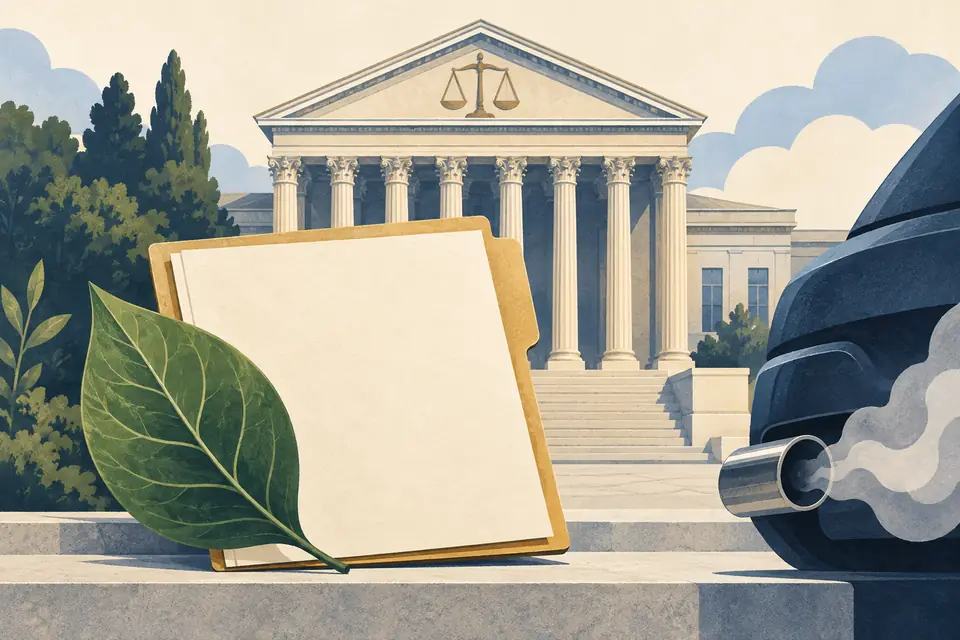
A coalition of states and local governments petitioned for review of EPA’s repeal of its 2009 endangerment finding on March 19, 2026. New York Attorney General Letitia James described New York as co-leading 39 other states, counties, and cities. The case concerns the legal basis for the repeal and associated vehicle-emissions changes. [1]


The finding provided a basis for regulating greenhouse gas emissions from new motor vehicles under the Clean Air Act. The challenged federal action also repealed associated vehicle emissions standards. The petition and attached material identify the action under review more precisely than a broad claim that all climate regulation disappeared. [2]
The coalition argues that the repeal is unlawful and threatens public health. Those are the challengers’ positions. The agency’s legal and policy rationale is set out in the federal action. A court must evaluate the dispute; announcing litigation does not establish that either side has prevailed.
A petition for review is also different from an order staying a rule. Whether a measure remains effective during litigation must be checked against the actual court orders.
Vehicle manufacturers and suppliers need to distinguish federal requirements, state requirements, product plans, and litigation risk. Investment decisions may span several years, so a change in one rule can affect planning without resolving every compliance obligation. The useful next evidence is the court’s procedural orders and any merits decision, rather than the number of forceful statements issued by the parties.
Sources support the dates and events discussed. This post is not a live update. Financial examples and analysis are for general information. Article images are AI-generated editorial illustrations, not photographs of the events or people discussed.
Revision note: The coalition included states and local governments, not 40 states. This account cites the March petition and does not assert a later outcome.
For factual corrections, see our corrections policy.
Santander’s acquisition announcement explains the proposed ownership change and scale of the combined banks. Here is how to read that record.
Warsh took office on May 22, 2026. The transition explains how confirmation, Board membership, and FOMC leadership fit together.

Three co-heads share global investment banking leadership. The practical questions concern client coordination, responsibility, and execution.