Home

U.S

Markets

Business

Banking

Investigations

ESG

FinTech

Opinion

Goldman Sachs Pushes Fed Rate Cut Forecast to December 2026

Author Evan J. Mercer

By Evan J. Mercer

May 11, 2026

Goldman Sachs Pushes Fed Rate Cut Forecast to December 2026

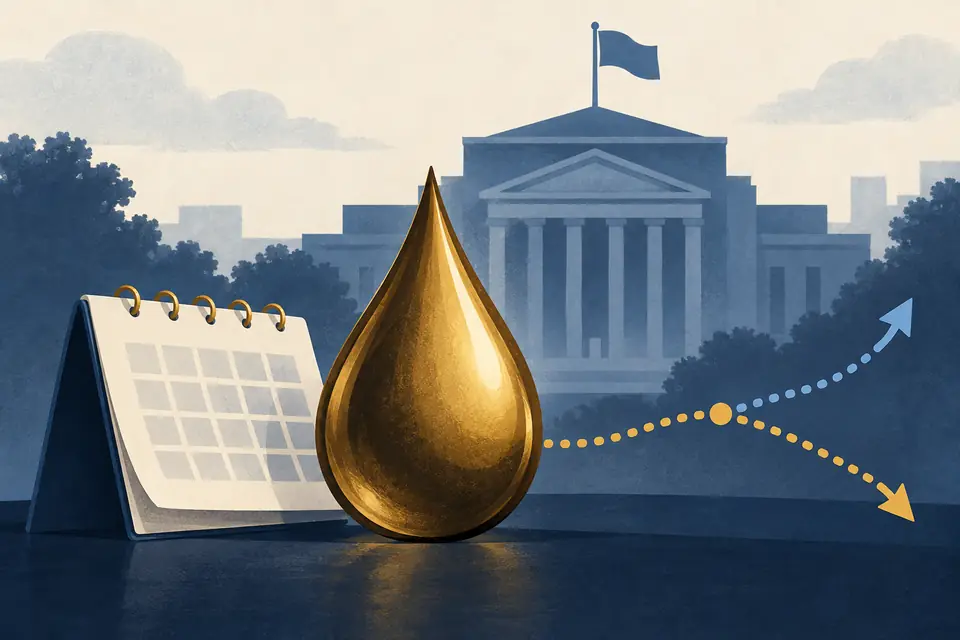
Goldman Sachs has revised its expectations for the Federal Reserve's next rate move, pushing its forecast for the first cut back to December 2026 — with a second reduction now penciled in for March 2027. The change marks a notable shift from the bank's previous call, which had anticipated the first cut arriving in September 2026. Economists at the firm now say the bar for easing remains high, requiring clearer evidence of cooling inflation and softer labor data before the Fed feels justified in moving.

The delay to the U.S. interest rate cut outlook reflects a combination of domestic and global pressures that have grown more entrenched over recent months. The main culprits, according to Goldman, are sticky inflation and elevated energy prices — both of which have kept consumer costs higher than policymakers are comfortable with.Despite solid economic growth and a resilient job market, these persistent price pressures have left the Federal Open Market Committee in a cautious holding pattern,prioritizing price stability over near-term stimulus.

The Lingering Pressure of High Energy Prices

A central obstacle for the Fed is the ongoing turbulence in global energy markets.The Iran War, which escalated at the end of February 2025,sent oil prices sharply higher and has continued to drive up costs across the supply chain.These high energy prices affect far more than the cost at the gas pump they push up transportation, manufacturing, and distribution costs, keeping headline inflation elevated even as other categories begin to moderate.The passthrough of energy costs into broader prices has become one of the more stubborn features of the current inflation picture.

Goldman Sachs analysts have noted that as long as energy remains a meaningful driver of cost-push inflation, the Fed is unlikely to pivot. The bank's updated analysis warns that the commodity shock stemming from the Middle East conflict has effectively placed a floor under inflation, making early intervention a policy risk. Goldman has also flagged that a peace agreement could change the calculus — Fed Governor Christopher Waller said in April that policymakers would be open to cutting rates later this year if a resolution to the conflict emerged in a timely way — but for now, the base case remains December 2026 for the first move.

Rising Inflation and the Challenge of the 2 Percent Target

Beyond energy, the broader inflation picture continues to give the Fed pause. Core Personal Consumption Expenditures — the central bank's preferred inflation gauge — is currently running at 2.9 percent, still well above the 2 percent target that serves as the benchmark for stable, sustainable growth. Goldman's economists argue that without a meaningful softening in the labor market or a sustained deceleration in services costs, there is little justification for lowering borrowing costs in the near term. The International Monetary Fund has projected similarly, forecasting that core PCE will not return to the 2 percent target until early 2027.

The decision to delay reflects a broader reality that the final stretch of the inflation fight tends to be the most difficult. The early post-pandemic price surge has largely faded, but what remains is more structural — driven by wage growth that remains slightly above the pace consistent with low inflation. Goldman's updated forecast signals that "higher for longer" is less a rhetorical frame at this point and more a description of where policy is likely to sit through the remainder of 2025 and much of 2026.

Anticipating the First Move in Late 2026

With the Fed having held the federal funds rate steady at 3.50 percent to 3.75 percent at its April 29 meeting — a decision that drew four dissents, the most since 1992 — the current rate environment is expected to persist for the foreseeable future. Mortgage rates, credit card interest rates, and business borrowing costs are likely to remain near current levels, creating headwinds for the housing market and capital investment.For savers, the delay extends the window to take advantage of elevated yields on certificates of deposit and high-yield savings accounts.

Goldman's revised outlook reflects a deliberate preference for caution over speed. The firm's position is consistent with what the Fed itself has been signaling: it would rather hold rates longer and confirm that inflation is durably on a downward path than cut prematurely and risk a rebound in prices. The CME FedWatch Tool currently shows roughly 93 percent odds that the Fed will hold at its June meeting, in line with Goldman's view. For borrowers and investors alike, December 2026 has become the date to watch — and even then, the path will depend heavily on how inflation data and the geopolitical situation develop between now and year-end.


Author Evan J. Mercer

EVAN J. MERCER

ABOUT AUTHOR

In the U.S., Evan J. Mercer is a financial journalist who writes about banking, rules, and changes in the institutional market. He has a degree in economics and has worked as a reporter for about ten years.

Leave a Reply

Comment submitted successfully