




# Business
Elon Musk’s five-step process: a practical reading
A practical way to apply the five steps: challenge requirements, remove duplication, simplify, speed up, and automate.



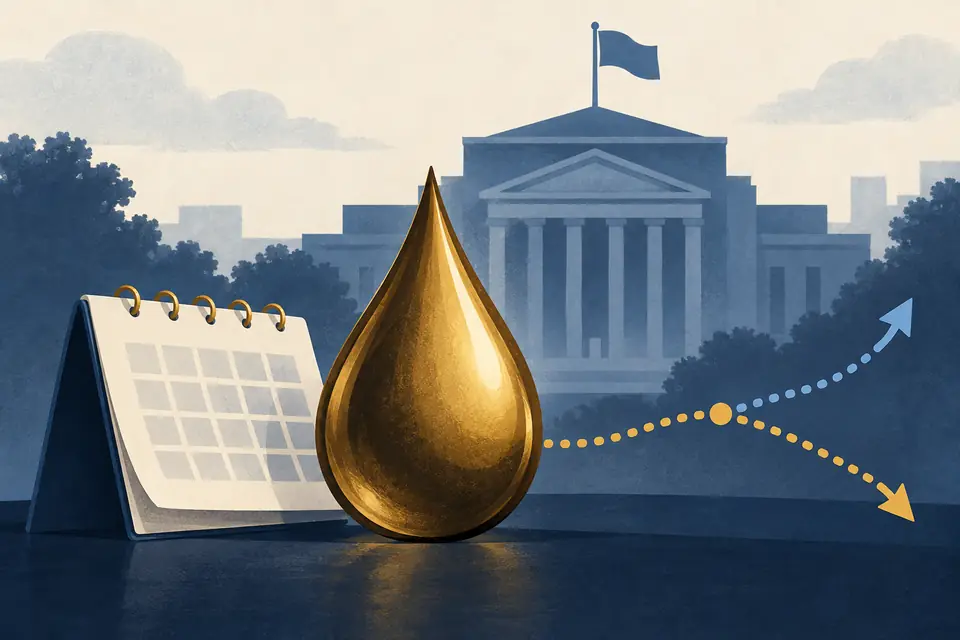
On May 11, 2026, Reuters reported that Goldman Sachs had moved its expected Federal Reserve cuts to December 2026 and March 2027, from September and December 2026. The bank’s reported reasoning was that high energy prices would prolong inflation pressure. The forecast offers a dated example of how a change in inflation assumptions alters an expected policy path. [1]
Bank economists estimate how policymakers may respond to future information. The Federal Open Market Committee makes its own decisions. Even a well-supported forecast can change when inflation, employment, financial conditions, or geopolitical events differ from the assumptions behind it.
The distinction also applies to market-implied probabilities. Futures pricing reflects traded expectations at a particular time and depends on the contract and calculation used. It is neither a promise from officials nor a fixed probability that remains valid after new data arrive.
Higher fuel costs can lift headline inflation and raise transport and production expenses. How broadly those costs spread depends on pricing power, demand, and how long the shock lasts. An energy shock can also weaken spending, creating competing pressures for policymakers.
That is why a rate forecast needs more than an oil-price assumption. The persistence of underlying inflation and the condition of the labor market also matter.
A later expected cut does not determine every mortgage, card, or business-loan rate. Fixed-term borrowing reflects longer-term yields and credit spreads, while variable-rate contracts may reset according to a specified benchmark. Compare the actual terms available and the cost of an adverse scenario. Planning around a single forecast date creates a fragile financing decision.
Sources support the dates and events discussed. This post is not a live update. Financial examples and analysis are for general information. Article images are AI-generated editorial illustrations, not photographs of the events or people discussed.
Revision note: The forecast is dated May 11, 2026. Undated probabilities and inconsistent year references in the earlier version have been removed.
For factual corrections, see our corrections policy.
A practical way to apply the five steps: challenge requirements, remove duplication, simplify, speed up, and automate.

The April 2026 launch added Alaska’s first European route. Demand, connections, seasonal schedules, and costs shape its business case.

Warsh’s April 2026 nomination hearing provides a starting point for examining the Fed’s mandate, accountability, and later decisions.